
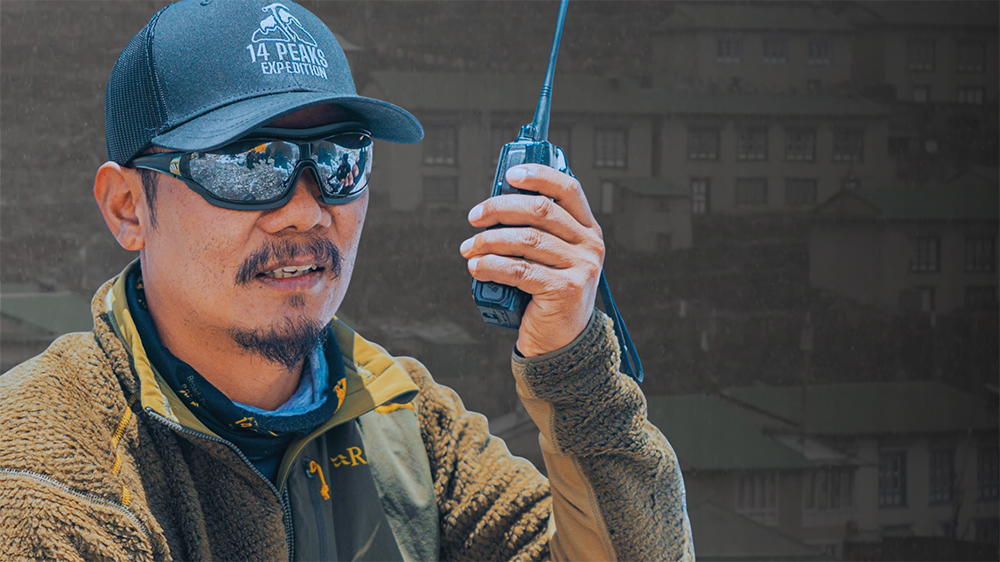
Mountain Radio Communication: The Lifeline of Every Expedition
On a high-altitude expedition, communication is more than convenience-it's a critical safety system. Above Base Camp, where mobile networks rarely exist and weather can change in minutes, handheld radios become the primary link between climbers, guides, camp managers, and rescue teams.
At 14 Peaks Mountaineering Institute, we teach that effective radio communication is just as important as technical climbing skills. Clear, concise, and disciplined communication can prevent accidents, coordinate logistics, and save lives.
Every member of an expedition relies on radio communication to:
- Report their location and progress.
- Receive weather updates and route information.
- Coordinate rope fixing and movement between camps.
- Request medical assistance or emergency evacuation.
- Confirm safe arrivals and departures from each camp.
- Stay connected when visibility is poor or climbers become separated.
On peaks such as Everest, Manaslu, Ama Dablam, and K2, radios are often the only reliable means of communication above Base Camp.
A typical Himalayan expedition follows a structured communication network:
Base Camp
- Expedition Leader
- Base Camp Manager
- Medical Team
- Weather Team
Camp I
- Climbing Guides
- Sherpa Team
Camp II
- Lead Guides
- Rope Fixing Team
Camp III / Camp IV
- Summit Team
- High-Altitude Sherpas
Every movement up and down the mountain is communicated through this chain, ensuring everyone knows where each team is and whether assistance is required.
Professional radio communication is always brief, clear, and purposeful.
Good communication includes:
- Identify yourself first.
- Identify who you are calling.
- Deliver your message clearly.
- Wait for confirmation.
For example:
"Base Camp, this is Camp II. Three climbers arrived safely at 6:45 AM. All members are healthy and continuing to Camp III. Over."
Or:
"Camp III, this is the Summit Team. Strong winds above the Yellow Band. We are holding positions. Over."
Ending with "Over" tells the other station it is their turn to respond.
Ending with "Out" means the conversation has finished.
Copy – I understand your message.
Roger – Message received.
Affirmative – Yes.
Negative – No.
Stand By – Wait for further instructions.
Over – I have finished speaking and expect a reply.
Out – Conversation finished.
Repeat – Please transmit the message again.
These standardized terms reduce confusion, especially during poor weather or weak radio signals.
During an expedition, radio updates should include:
- Current location.
- Time of arrival or departure.
- Number of climbers.
- Weather conditions.
- Physical condition of the team.
- Oxygen status (on 8,000-meter expeditions).
- Any hazards encountered.
- Next planned movement.
Keeping messages short leaves the communication channel available for urgent calls.
One of the most important lessons we teach is radio discipline.
Avoid:
- Long conversations.
- Interrupting active transmissions.
- Speaking too quickly.
- Pressing the transmit button before speaking.
- Unnecessary chatter during summit day.
During emergencies, every second matters, and clear communication allows rescue teams to respond quickly.
Modern mountaineering is about more than strength and technical ability. Every successful expedition depends on teamwork, situational awareness, and effective communication.
At 14 Peaks Mountaineering Institute, students learn not only how to climb but also how to communicate like professional mountaineers. From Base Camp to the summit, every radio transmission is an opportunity to improve safety, strengthen teamwork, and make better decisions in the mountains.
Because on the world's highest peaks, the most important line isn't always the fixed rope—sometimes, it's the one carried over the radio.